How to Support Your Child's Language Development Before They Start Talking
Parents can receive pressure when it comes to how their little one is communicating. It can be in the form of:

The pediatrician highlighting the developmental norms.
The playdate at the park where the child who is only 2 months younger is already speaking in full sentences.
“Are you worried?” coming from your in laws.
If you clicked on this post, I am assuming you are a parent, caregiver, loved one, or another professional that works with children who have feeding and language differences. I encourage you to give yourself some grace. In this day and age, there are many confounding factors that can influence your little one’s development.
In early childhood, we learn that there are foundational concepts that support a child’s cognitive and language skills. We assess how they follow your point. We assess how they turn to sounds in the environment.
What pieces in the foundation can be preventing more growth?
As parents, we often eagerly await that first magical word. However, research shows that before a child ever speaks a meaningful sentence, they must master a complex set of "prelinguistic" skills. These silent milestones are the foundation of all future communication.
Based on recent scientific research and clinical observation tools, here is a breakdown of the critical skills toddlers master before words fully emerge.
1. Joint Attention (Sharing the Moment)
Long before they can say "look at that dog," a toddler learns to share attention with you. This is called Joint Attention, and it is a major predictor of later language success.
Dyadic Attention: This is the ability to engage face-to-face with a caregiver, coordinating emotions and attention between just the two of you.
Triadic Attention: Around 9 months, this evolves into a three-way interaction: the child, the parent, and an object (like a toy). The child looks at the toy, then at you, and back at the toy to ensure you are seeing what they are seeing.
2. Communicative Gestures
Gestures are the bridge to spoken language. Research indicates that the use of gestures, such as pointing, increases dramatically between 8 and 12 months.
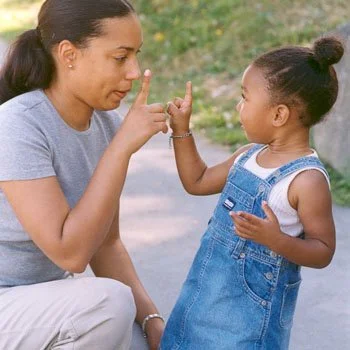
Deictic Gestures: These are "showing" gestures. They include pointing (to request something or show you something), giving objects to you, showing you an object, and reaching.
Representative Gestures: These are social signals, such as waving "hello" or "goodbye," nodding the head for "yes," or shaking the head for "no".
3. Understanding (Decoding)
A child understands language long before they can speak it. This "decoding" ability is a massive developmental step. Key milestones in this area include:
Response to Name: Turning or orienting when their name (or a caregiver’s name) is called.
Understanding Routines: Anticipating what comes next based on words or actions, such as understanding "let's go out," "up," or anticipating food during mealtime.
Recognizing Body Parts: Understanding simple questions like "where is your nose?" even if they cannot say the word "nose" yet.
4. Vocal Variety (Babbling and Sound Effects)
Crying is a baby's first communication, but as they grow, their vocalizations become more complex.
Babbling: This progresses from making vowel sounds to canonical babbling (repeating consonants like "ba-ba") and varied babbling (mixing different sounds like "ba-da-ma").
Sound Effects: Before using formal words, many toddlers master animal sounds (e.g., "moo," "woof") or environmental sound effects (e.g., car noises).
5. Behavior Regulation (Requesting and Protesting)
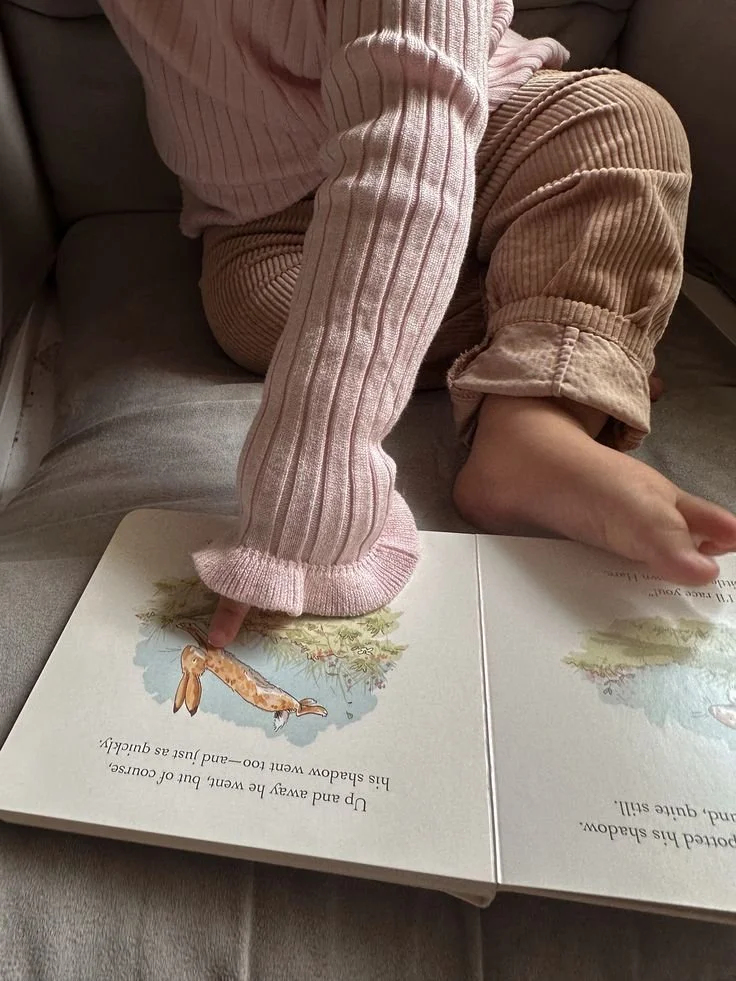
Communication is often driven by a desire to get needs met. This is known as Behavior Regulation. Infants learn to use eye contact, reaching, and vocalizing to request objects (like a toy that is out of reach) or to protest/refuse an activity. This shows the child understands that their communication can influence your behavior.
6. Turn-Taking and Social Conversation
Even without words, toddlers practice the rhythm of conversation.
Responsiveness: Responding to a parent's smile, touch, or voice.
Assertiveness: Initiating an interaction rather than just waiting to be spoken to.
Turn-Taking: The back-and-forth of play, where the child waits for their turn and then acts, mimicking the flow of a dialogue.
7. Coordination (Putting It All Together)
One of the most advanced skills before speech is Complexity—the ability to combine different behaviors into a single act. A beginner communicator might just reach for a toy. An advanced pre-verbal communicator will coordinate three things at once: looking at the parent + pointing at the toy + vocalizing a sound. This coordination signals a higher level of developmental maturity.
How You Can Help
Research emphasizes that parents play a crucial role in developing these skills. "Contingent interactions"—where you respond promptly and meaningfully to your child's signals—stimulate the brain and promote learning.
Mimic them: If they smile or coo, do it back. This builds turn-taking.
Label their world: When they point (Joint Attention), name the object they are looking at.
Use routines: Verbal routines (like saying "ready, set, go!") help children learn to anticipate and decode language.

Note: This post draws on clinical observation tools such as the OPISCoS form and the Communication Complexity Scale (CCS) to outline developmental milestones
The content shared here is for educational purposes only and does not constitute medical advice. Each child's development is unique, and I strongly encourage you to seek an individualized evaluation from a licensed speech-language pathologist who can assess your child's specific needs and create a tailored treatment plan.
References
Kailaheimo-Lönnqvist, L., Virtala, P., Fandakova, Y., Partanen, E., Leppänen, P. H. T., Thiede, A., & Kujala, T. (2020). Infant event-related potentials to speech are associated with prelinguistic development. Developmental Cognitive Neuroscience, 45, 100831. https://doi.org/10.1016/j.dcn.2020.100831
Salley, B., Brady, N., Hoffman, L., & Fleming, K. (2020). Preverbal communication complexity in infants. Infancy, 25(1), 4–21. https://doi.org/10.1111/infa.12318
Strazzer, S., Sacchi, D., Rigamonti, R., Miccoli, A., Bonino, M., Giancola, S., Germiniasi, C., & Montirosso, R. (2023). Prelinguistic intersubjective and socio-communicative skills in infants with neurodevelopmental disabilities aged 0–36 months: A new assessment and parent support tool. Frontiers in Rehabilitation Sciences, 4, 1088853. https://doi.org/10.3389/fresc.2023.1088853